Research Day 🤓 : going through Alzconnected forum
This is my initial day on working with my research project given by sam , analyzing Alzconnected forum data with NLP methods , I have to figure out which all nlp methods I can effectively use , Kim et al paper used sentiment analysis and topic modelling , but I am not sure which all methods can be utilised on this , solution : do a thorough literature review .
This genuinely interesting and a gold mine research area , I will get the opportunity to help people directly or indirectly who are struggling with dementia.
Types of people in the forum :
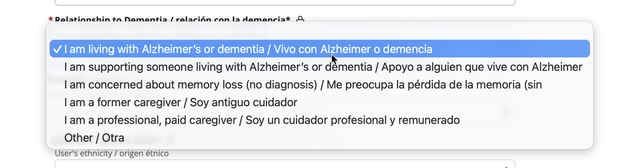
💡Note: I have to check whether I can identify the member type from the post and reply
The main thing we gotta focus on rn is :
read what people on this forum write about getting a younger-onset dementia diagnosis, and >use computer tools to find the common problems they describe and how they feel about them.
I am now gonna read through some posts on alz connected and what they usually discuss over there : some idea about alzconnected - it is a vanilla(kinda like a framework) based forum website, and they have a category of == I Am Living With Younger Onset Alzheimer's == , so we can just scrape data from there and generic data so that we won't leave out the caregiver's part .
First we gotta understand what younger onset Alzheimer's denote or mean ?
Younger onset dementia (YOD), sometimes called early-onset dementia, refers to dementia that >develops in people under the age of 65. It is not a specific disease but a term covering >several conditions that cause progressive problems with memory, thinking, behavior, language, >or daily functioning.
The most common causes include : Alzheimer's , FTLD , Vascular dementia , Dementia with Lewy bodies
Symptoms Symptoms vary depending on the cause but may include:
- Memory problems
- Difficulty planning, organizing, or making decisions
- Language and communication difficulties
- Changes in personality or behavior
- Problems with work performance
- Difficulty carrying out familiar tasks
the above info is quoted from chatgpt
The discussions going on in the forum under the above mentioned category is consistent with the symptoms told by chad 🗿
I just went through just one example on the discussion forum and the first post itself was a gold mine and a perfect case why our research be very useful.
First Case study : jjackson – "Phantom Smells"
Quoting Jackson :
"I’m 63 and have had phantom smells for almost 2 years. My primary care doc dismissed them 1+ years ago as Covid-related. Since then I’ve begun having memory problems, definitely a personality change (much crying/depression), and difficulty problem-solving. My mom had EO and my dad some form of dementia. I had a PET scan yesterday and will have a neuropsych evaluation next month. Pretty sure I have EO. But all that said, does anyone else get phantom smells? I get them every few days, sometimes just 1xday,other days they’re constant. " Tagged: Early Stage (Mild) Hallucinations Delusions
breaking down that post :
The core diagnosis challenge:
- the primary care doctor dismissed the phantom smells as covid-related over an year ago.
- What can we learn from this : symptoms not taken seriously, leading to delay
- He's had symptoms for 2 years and is only now getting a PET scan
- there is a gap between something's wrong and getting tested
**Emotional side is there ** ?maybe symptoms?: frequent crying/ depression ,personality change,anxiety of having Early onset. ( we can use the sentimental analysis part of the project to pick these stuff up.
one thing to notice - this post is not directly about diagnosis .his actual question was does anyone else get phantom smells? - so it comes under info seeking and not diagnosis complaint.
- so we gotta identify whether a post is about diagnosis and quality check them (fyi , our aim is to understand the diagnosis challenge)
These might be the challenges that will be appearing across several posts spanning through the forum : dismissal, delay, being told you're too young, misdiagnosis, cost, family history prompting self-referral and the feelings attached to them.
- this posts show several of these above mentioned patterns but need to look upon a larger sample size to make sure this is a recurring pattern.
Now going through the replies of Jackson's post
Some comments were agreeing with Jackson for having experiencing the same while some were suggesting somethign else.
Look at michelleb65: "I was diagnosed with MCI due to early onset AD. No one seems concerned about this symptom, though." That's a second example of the exact dismissal theme from the original post — symptoms being brushed off. And lorainesjoy ("I have EOA, MCI") and others are sharing their own diagnosed status. So the thing you're hunting for (diagnosis challenges) shows up scattered across replies not just in the first post.
diagnosis challenges scattered across replies , Kim et al found : 52000 replies vs 8000 original posts
Notable facts quoted by claude : The "Commonly Used Abbreviations" box (EO = Early Onset, MCI, LO = Loved One, DH = Dear Husband, etc.) is genuinely handy — people write in this shorthand constantly, and you'll need to know it to read posts correctly and later to clean the text. The category list with counts tells you about data volume: "I Am Living With Younger Onset Alzheimer's" has only ~288 discussions, while "Caring For a Spouse or Partner" has ~8,900. So the patient voice is a small, precious dataset, and a lot of younger-onset diagnosis talk will actually come from carers posting in the bigger spouse/parent forums. Good thing to flag to Sam.
What are we doing here basically ?
what I just now manually did is to read through posts and reply - and understand whether a post is diagnosis related or discuss something remotely related to diagnosis and whether it have issues or problems explained by the party essentially what I did was :
find the things that make it hard for younger people(below 65 ig) to get a dementia diagnosis and what people say about them.
I essentially have to automate the entire process I did manually this can be done with NLP techniques.
This can be split up into several jobs.
Job 1 : Sorting whether an issue is about diagnosis
- this is like a classification task Different ways to achieve this job are : Keyword/rule filtering*(pull post containing keywords like diagnosed, neurologist, referral, too young, etc)* ,text classification - train a model on examples you've labelled "diagnosis / not diagnosis." Options run from simple-and-transparent (logistic regression / Naive Bayes on word features) to powerful-but-opaque (fine-tuned BERT). ,LLM Zero shot : just ask a model "does this post describe a diagnosis challenge? yes/no.(harder to explain)
Job 2: Discovering what are the challenges that keeps coming up
- This is topic modelling finding the themes dismissal, delay, cost ,etc without telling the computer in advance.
- LDA,BERTopic(I think this is best tool have to do trade off comparison with other methods before I jump into a conclusion),Clustering on embeddings.
Job 3 — Measuring feeling: "how do they feel about it?"
This is sentiment / emotion analysis.
VADER — lexicon-based, fast, and transparent (you can see exactly which words drove the score). Great starting point. LIWC — categorises words into psychological buckets (anxiety, anger, sadness); used in prior forum studies. Transformer sentiment/emotion models (e.g. RoBERTa fine-tuned, or GoEmotions for specific emotions like fear, anger, sadness) — more accurate, especially for sarcasm/nuance, but a black box.
Where Explainable AI comes to play ? : in the last to understand what contributes to what .
Methods to consider
Modern / LLM-based methods
Zero-shot / few-shot classification — just prompt an LLM ("is this a diagnosis challenge? which type?") with no training data. Fast, surprisingly strong. LLM-based extraction & summarisation — have a model pull the challenge + summarise long threads. The Saha et al. paper even compared LLM replies to human ones.
Sentiment, but sharper
Aspect-Based Sentiment Analysis (ABSA) — this one's genuinely valuable and I under-sold it earlier. Instead of "this post is negative," it tells you the sentiment toward a specific target: negative about the GP, anxious about the test results, positive about peer support — all within one post. Perfect for a project about feelings toward different parts of the diagnosis journey. Emotion detection (GoEmotions, etc.) — specific emotions (fear, anger, grief) rather than just polarity.
Extraction methods (pulling specific things out) — this is probably what you're "missing":
Named Entity Recognition (NER) — automatically tag doctors, tests (MRI, PET), specialists (neurologist), drugs, and time expressions. Medical versions exist (scispaCy, medspaCy). Great for quantifying things like "how often is a GP mentioned" or extracting delay durations. Keyphrase extraction (TF-IDF, YAKE, KeyBERT) — surface the most salient phrases per challenge. Relation extraction — the advanced one; Tu et al. used it on this exact forum to pull condition→treatment pairs. You could pull symptom→doctor-response relations. Stretch goal.
Trend / temporal analysis
Tracking topics and sentiment over time (e.g. pre/post-COVID) — several prior studies did this. Less a "method," more an axis you apply the above along.
NER (Named Entity Recognition) = a technique that automatically finds and labels the "things" in text — names, places, dates, and (with medical versions) symptoms, drugs, tests, doctors. Take the phantom-smells post: "My primary care doc dismissed them 1+ years ago… I had a PET scan yesterday and will have a neuropsych evaluation next month." NER would tag:
primary care doc → clinician PET scan, neuropsych evaluation → medical test 1+ years ago, next month → time expression
Why it's useful : instead of reading 300 posts to count how often a neurologist is mentioned, or to find typical delay lengths, NER pulls those out automatically so you can quantify them. General tools: spaCy. Medical ones (trained on health text): scispaCy, medspaCy.
Integrated Gradients, Input×Gradient, LRP, Attention Rollout — all available in Captum (PyTorch's interpretability library) plus SHAP/LIME. Those get you real, publishable explanations now.
That's all research for today it's morning now lol GN : )